Property Tips

Unlock Homeownership: Maximize Tax Benefits & Save Big

Unlock Homeownership: Maximize Tax Benefits & Save Big

Owning a home is more than just a place to hang your hat—it’s a financial juggernaut. Did you know that according to IRS data, the average tax deduction for mortgage interest alone can save homeowners up to $3,100 annually? That’s a hefty chunk of change to leave on the table. Yet, many homeowners are unaware or underutilize the tax benefits available to them.

Cut Your Tax Bill: The Power of Mortgage Interest Deductions

The mortgage interest deduction is a homeowner’s secret weapon against an inflated tax bill. Here's how it works: when you pay mortgage interest, you can deduct those payments from your taxable income, effectively lowering the amount the IRS gets its hands on. Studies suggest that this deduction alone can reduce an average homeowner’s taxable income by an impressive margin.

To be eligible, your mortgage must be secured by your primary or secondary home, and the loan must be no larger than $750,000 (or $1 million if you purchased before December 15, 2017). Notably, this deduction is itemized, meaning you’ll need to forgo the standard deduction and opt for itemizing your tax return. A bit more work, but worth every penny saved.

Actionable tip: Keep meticulous records of your mortgage interest payments. Your lender will provide Form 1098, which details the interest paid. This document is your golden ticket for deductions, so keep it handy when tax season rolls around. Failing to do so is like leaving free money on the table.

Property Taxes: A Deduction You Can't Afford to Miss

Property taxes can be a significant annual expense, but they also offer a valuable deduction. By itemizing your federal tax return, you can deduct the property taxes you pay on your home. According to home insurance data, the average property tax rate in the U.S. is about 1.1%, making this deduction potentially substantial.

The process of claiming property tax deductions is straightforward. First, gather your property tax bills, which show the amounts paid over the year. Report this figure on Schedule A of your tax return under "Taxes You Paid". Remember, the total deduction for state and local taxes, including property taxes, is capped at $10,000 ($5,000 for married filing separately).

Practical tip: Consider timing your payments to maximize your deductions. If possible, pay your property taxes at the end of one tax year rather than at the beginning of the next. This strategy might increase your deductions for the current tax year, especially if you anticipate hitting the cap next year.

Home Sale Exclusion: Keep More Profit in Your Pocket

When it comes time to sell, the home sale exclusion can keep more profit in your pocket. This exclusion allows you to exclude up to $250,000 of capital gains for single filers and $500,000 for married couples filing jointly from the sale of your primary residence. The rule is straightforward: live in your home for at least two of the five years preceding the sale.

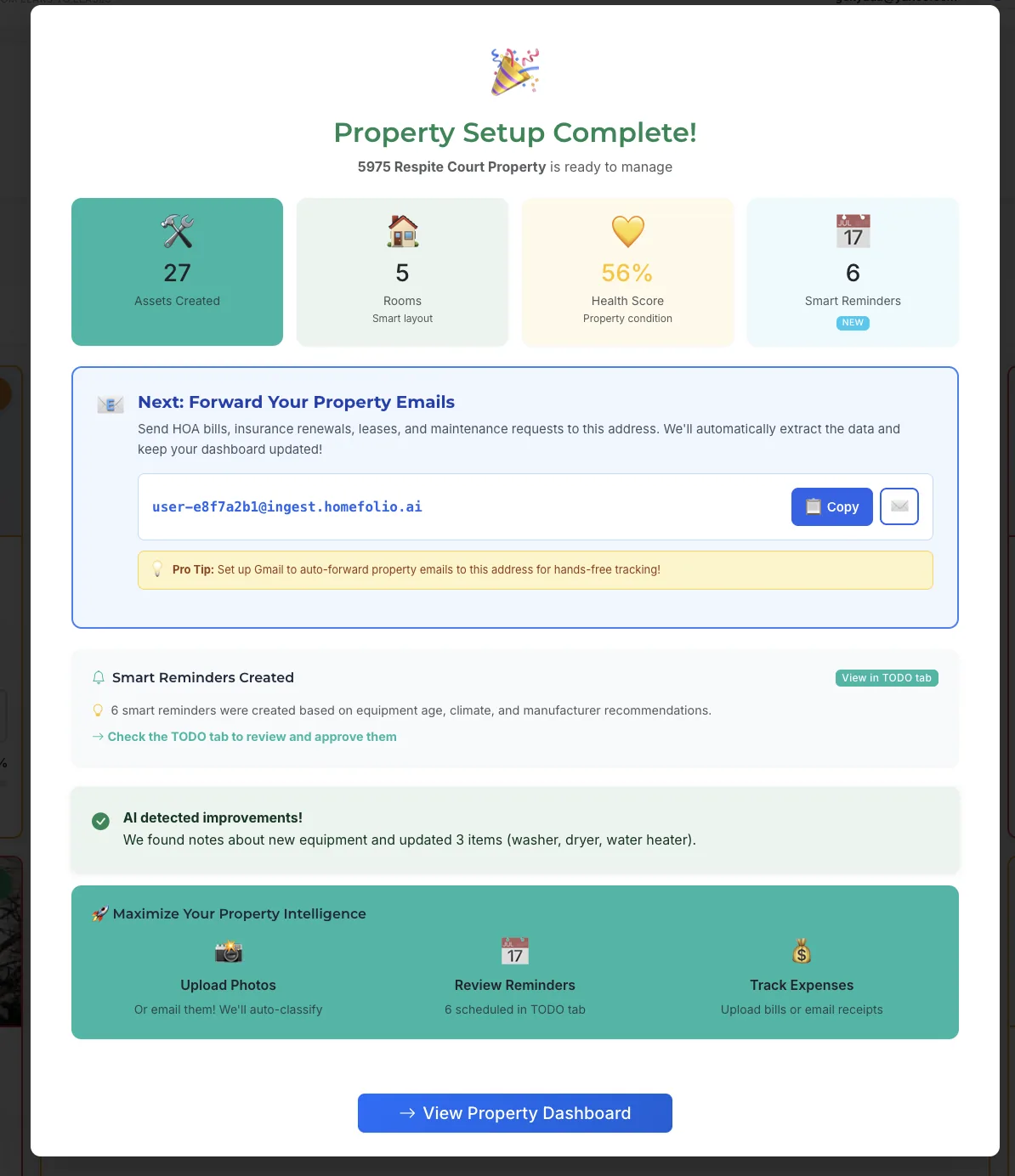
Maximizing your exclusion benefits means strategically planning your sale around these living requirements. Additionally, any home improvements can increase your cost basis, reducing your potential tax liability. Here, having all your home improvement documents organized is key. For a seamless home sale process, ensure all your home improvement documents and receipts are already there, connected to the right property with Homefolio AI.

Tip: Document every improvement made, from new roofing to updated kitchens. These costs can substantially raise your cost basis, thus reducing taxable gains upon sale. Homefolio AI can handle these details automatically, so your home's information is in one place, ready when you need it.

Capital Gains: Turn Your Home Into a Tax Advantage

Capital gains tax can be a daunting prospect for homeowners looking to sell. However, understanding how to calculate and minimize these taxes can turn your home sale into a tax advantage. The formula is deceptively simple: selling price minus your adjusted basis equals capital gain. Your adjusted basis starts with your purchase price, plus any home improvements and less any depreciation.

Reducing your capital gains tax liability involves planning. The home sale exclusion is your first line of defense, but beyond that, consider timing your sale to align with periods of lower income, potentially dropping you into a lower tax bracket. Another strategy is to reinvest profits into another primary residence, thus deferring capital gains taxes.

Actionable advice: Maintain detailed records of your home improvements. Each improvement increases your home’s cost basis, potentially saving you thousands when it comes time to calculate capital gains. Keep these records updated and easily accessible; they’re not just receipts—they’re tax-saving tools.

Home Office Deductions: A Hidden Gem for the Self-Employed

For homeowners who work from home, the home office deduction is often overlooked, yet it can provide substantial tax savings. To qualify, your home office must be your principal place of business or a space where you regularly meet clients. The space must also be used exclusively for business purposes.

Calculating this deduction can be done in two ways: the simplified method or the actual expenses method. The simplified method allows for a deduction of $5 per square foot of office space, up to 300 square feet. The actual expenses method requires more paperwork but can yield a higher deduction if your costs are substantial.

Common pitfalls: Ensure the space is exclusively used for business. Mixing personal and professional use can disqualify your deduction. Additionally, accurately calculate and document your expenses or square footage to prevent issues during an audit. Remember, the IRS loves its specifics.

FAQs: Common Questions About Homeownership Tax Benefits

Can I deduct home improvements on my taxes?

Generally, home improvements are not directly deductible. However, they increase your home's cost basis, which can help reduce capital gains taxes when you sell your home. Certain energy-efficient upgrades may qualify for separate tax credits. Always keep documentation to substantiate these improvements.

How does refinancing affect my mortgage interest deduction?

Refinancing can affect your deduction depending on your new loan amount. As long as your refinanced mortgage doesn't exceed $750,000, you can still claim the interest deduction. If you cash out, only the interest on the original mortgage balance is deductible unless used for home improvements.

Are there tax benefits for first-time homebuyers?

First-time homebuyers can benefit from tax deductions such as mortgage interest and property taxes. Additionally, some states offer specific credits or deductions for first-time buyers. Always check both federal and state provisions to maximize your benefits.

What documents do I need to claim home-related tax deductions?

Key documents include Form 1098 for mortgage interest, property tax receipts, and records of any home improvements. For home office deductions, keep bills and receipts related to maintenance and utilities. Accurate documentation is essential for substantiating your claims.

How do I handle taxes if I rent out my home?

If you rent out your home, you must report rental income and can deduct associated expenses. These include mortgage interest, property taxes, insurance, repairs, and depreciation. Be sure to distinguish between personal and rental use of the property for accurate reporting.

Your Home's Records — Already There When You Need Them.

Warranties, receipts, maintenance history, and appliance details — connected to your property automatically.

Get Started Free →