Property Tips

Avoid Costly Surprises: Mastering Property Tax Assessments

Avoid Costly Surprises: Mastering Property Tax Assessments

Why Property Tax Assessments Matter More Than You Think

In the grand scheme of homeownership, it’s not the leaky faucets or creaky floorboards that blindside you—it’s the property tax assessments. They can make or break your annual budget. According to the National Taxpayers Union, up to 60% of properties in the U.S. are over-assessed, leading to higher tax bills. That's not just a percentage; it’s a financial ambush waiting to happen.

Your property tax assessment directly determines your annual tax bill. If your property is assessed at a higher value than it should be, you’re not just overpaying in taxes—you’re funding the local government’s next big project single-handedly. The stakes are high, and the consequences of an incorrect assessment are as real as a broken furnace in January.

Consider the real-life horror stories of homeowners who ignored their assessment notices. One minute, you're sipping coffee on your porch; the next, you're opening a tax bill that’s skyrocketed. It’s like finding out your morning cup of joe was laced with gold dust. Don’t let ignorance rob you blind. Understand the process and keep your finances in check.

Demystifying the Assessment Process: What Do Assessors Look For?

Behind every property tax assessment is an assessor with a clipboard filled with numbers and criteria. They evaluate several factors that contribute to your property’s assessed value. Everything from the square footage of your home to the number of bedrooms and bathrooms counts. Even that charming bay window you installed last summer can sway the assessor’s calculations.

Recent home improvements—while great for comfort—can also tip the scales. A new roof or an expanded kitchen might increase your home’s market value, but it also hikes up your assessment. Industry data shows that homeowners often see a 5-15% increase in their property’s assessed value post-renovation.

So, how do you navigate this labyrinth? Stay informed and proactive. Request to see the factors that assessors consider in your area. Understanding these can help you anticipate changes and plan accordingly. It's not about avoiding improvements but managing their impact on your tax obligations.

Common Mistakes Homeowners Make with Property Tax Assessments

Property tax assessments are like dental appointments—easy to ignore but potentially costly if neglected. One common blunder is ignoring assessment notices altogether. These documents often go unnoticed until the tax bill arrives, bringing with it an unwelcome surprise. Don't let those notices collect dust—open them, understand them, and act if something feels off.

Another pitfall is not appealing an inaccurate assessment. If you believe your property has been overvalued, you have the right—and should exercise it—to challenge the assessment. Consider this: only 2% of homeowners appeal their property assessments, but those who do often see reductions of 10-15% in their annual taxes.

To avoid these mistakes, set a reminder for when assessments are due, and prepare to scrutinize the details. If numbers don't add up, take action. It's your money, and there's no reason to hand it over without a fight.

How to Successfully Challenge an Unfair Property Tax Assessment

So, you’ve found discrepancies in your assessment. What now? The appeal process may seem daunting, but it’s more manageable than a DIY plumbing job gone wrong. Start by gathering evidence—recent property sales in your area, photos of your home, and any documentation of discrepancies.

The appeal process typically involves submitting a formal request to your local tax authority. Include all your evidence, and be prepared to present your case clearly and concisely. Some jurisdictions require an in-person hearing, so practice your argument as if you're rehearsing for a courtroom drama.

Remember, persistence pays off. According to home finance experts, successful appeals can lower your assessed value, offering immediate relief on your next tax bill. It's worth the effort to challenge an unfair assessment—after all, it's your hard-earned money at stake.

The Role of Home Records in Property Tax Assessment

Accurate documentation is your best ally in the assessment process. Whether it's proof of home improvements or records of repairs, having these documents handy can make a significant difference. A well-maintained record can validate your claims during an appeal and even prevent over-assessment in the first place.

Your maintenance records can serve as a testament to the actual condition of your home. If an assessor overestimates your property’s value due to perceived improvements, documentation can set the record straight. This is where having your home’s information in one place, ready, becomes invaluable.

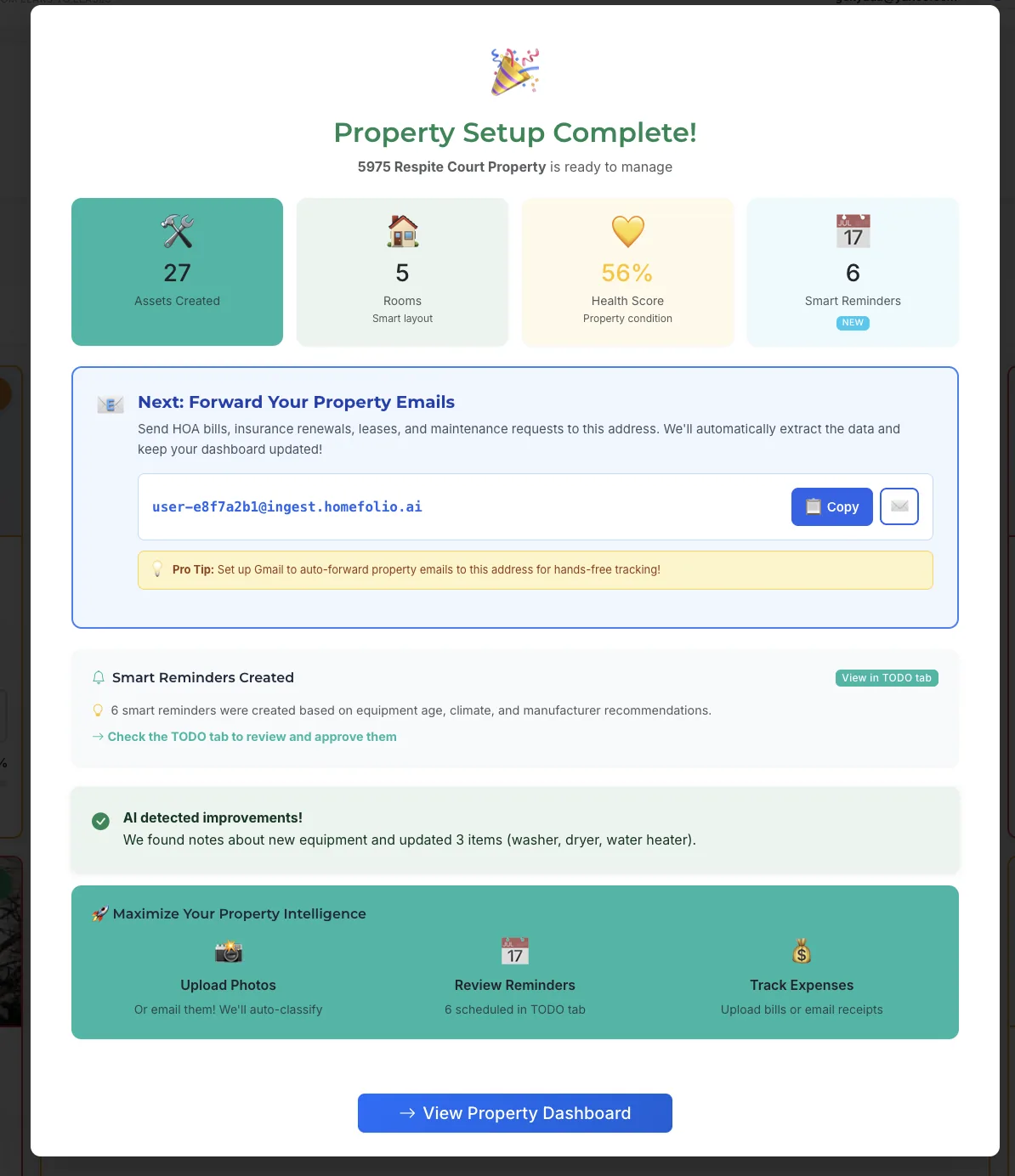
Enter Homefolio AI. This tool ensures your home’s documents, such as maintenance records and improvement documentation, are already there when you need it and connected to the right property, making property tax assessments more accurate and less stressful. Avoid the shoebox shuffle and keep your records where they belong—ready for action.

FAQ: Homeowners' Top Questions About Property Tax Assessments

What can I do if I miss the appeal deadline?

Missing the appeal deadline isn't ideal, but all is not lost. Contact your local tax authority immediately to see if there's a secondary deadline or a provision for late appeals. Some jurisdictions allow for extensions under certain circumstances. It's also a good idea to prepare for next year's assessment early, ensuring you never miss another deadline.

How often are property assessments conducted?

Property assessments are typically conducted annually, but this can vary by jurisdiction. Some areas may reassess every two or three years. Check with your local tax assessor’s office to understand the frequency in your area. Knowing the schedule allows you to prepare and make timely appeals if necessary.

Can home renovations decrease my property taxes?

Generally, home renovations increase the value of your property, which may raise your tax assessment. However, if renovations address issues like safety hazards or energy efficiency, you might qualify for tax credits or exemptions. It's essential to research local tax incentives before undertaking major projects.

What if my neighbor's property is assessed lower?

If you notice your neighbor's property is assessed lower despite similar features, it could indicate an error. Gather evidence of comparable properties and reassessments to build your case. Present this information during your appeal. Disparities in assessments can sometimes highlight mistakes in your own property's valuation.

How do home sales in my area affect my property tax assessment?

Recent home sales play a crucial role in determining property assessments. If homes in your area sell for high prices, your assessed value may increase. Stay informed about local real estate trends and sales data. This information helps you understand potential changes in your assessment and prepares you for possible tax increases.

Your Home's Records — Already There When You Need Them.

Warranties, receipts, maintenance history, and appliance details — connected to your property automatically.

Get Started Free →