Avoiding Costly Mistakes: Master Your Property Tax Assessment
Here's a staggering thought: according to home insurance data, about 60% of homeowners have no idea how their property taxes are calculated. This oversight can cost you thousands every year. Property tax assessments may not be the most thrilling topic, but understanding them is crucial if you want to avoid overpaying your taxes.
The Real Cost of Misunderstanding Property Tax Assessments
Property taxes are a significant chunk of your annual budget. For the average American homeowner, they can range from a few hundred dollars to over $10,000 per year, depending on where you live. Misjudging how these taxes are assessed can lead to budgeting nightmares, making that dream renovation feel like a financial ball and chain.
Overpaying on your property taxes is like throwing money into the wind. Industry data shows that homeowners often overpay by an average of $1,000 annually due to miscalculations or unchallenged assessments. Imagine tossing that cash into your backyard fire pit instead of using it for a much-needed family vacation.
To prevent this financial faux pas, it's essential to understand how property taxes fit into your budget. Keep an eye on your assessment notices and always be prepared to question discrepancies. A small investment in understanding the process can save you a significant sum.
Decoding Property Tax Assessments: What You Need to Know
Property tax assessments are calculated based on the assessed value of your home, which can differ substantially from the market value. The assessment ratio, which varies by location, is applied to the home's market value to determine its assessed value. For instance, if your home is worth $200,000 and the assessment ratio is 80%, your assessed value is $160,000.
Several factors influence assessment values, including the size of your property, its location, and any improvements made. External factors such as neighborhood development and market trends also play a significant role. Understanding these variables can help you predict and even contest unexpected changes in your assessment.
For a concrete approach, review your property's assessment card at your local assessor's office. Look for inconsistencies like incorrect square footage or missing improvements. Correcting these errors can ensure you're not being taxed for amenities you don’t have.
When to Challenge Your Property Tax Assessment
Errors in property tax assessments are more common than you might think. Studies suggest that as many as 30-60% of properties are over-assessed. This means there could be a significant chance you're paying more than you should. Spotting inaccuracies requires a keen eye and a fair bit of paperwork, but the potential savings make it worthwhile.
To challenge your assessment, start by comparing your property's assessment to similar homes in your area. If yours is higher without justification, you may have grounds for an appeal. Document any discrepancies, such as misreported square footage or number of rooms, and gather evidence from recent home sales in your neighborhood.
The appeal process varies by locality but generally involves submitting a formal appeal with supporting documentation. Be prepared for a hearing where you can present your case. Remember, successful appeals can lower your tax bill for years, so it's worth the effort.
The Role of Home Improvements in Property Tax Assessments
Home improvements can be a double-edged sword when it comes to property tax assessments. While they may increase your home's market value and personal enjoyment, they can also boost your assessed value. This, in turn, can lead to higher property taxes. Understand that not all renovations will affect your assessment equally.
Generally, major structural changes like adding a new room or upgrading your kitchen will increase your assessed value. On the other hand, cosmetic upgrades such as new paint or landscaping might not have the same impact. When planning renovations, consider the potential tax implications and weigh them against the benefits.
Always document your improvements. Keep receipts, permits, and photographs handy. These documents can be crucial during an assessment review to ensure your property is evaluated accurately. They also serve as valuable evidence if you decide to appeal an assessment.
Effortlessly Managing Documentation for Tax Purposes
Maintaining accurate records is essential for managing your property taxes effectively. Misplacing crucial documents can be costly, especially when you need them to challenge an assessment or verify a home improvement. Many homeowners find themselves scrambling during tax season due to poor documentation practices.
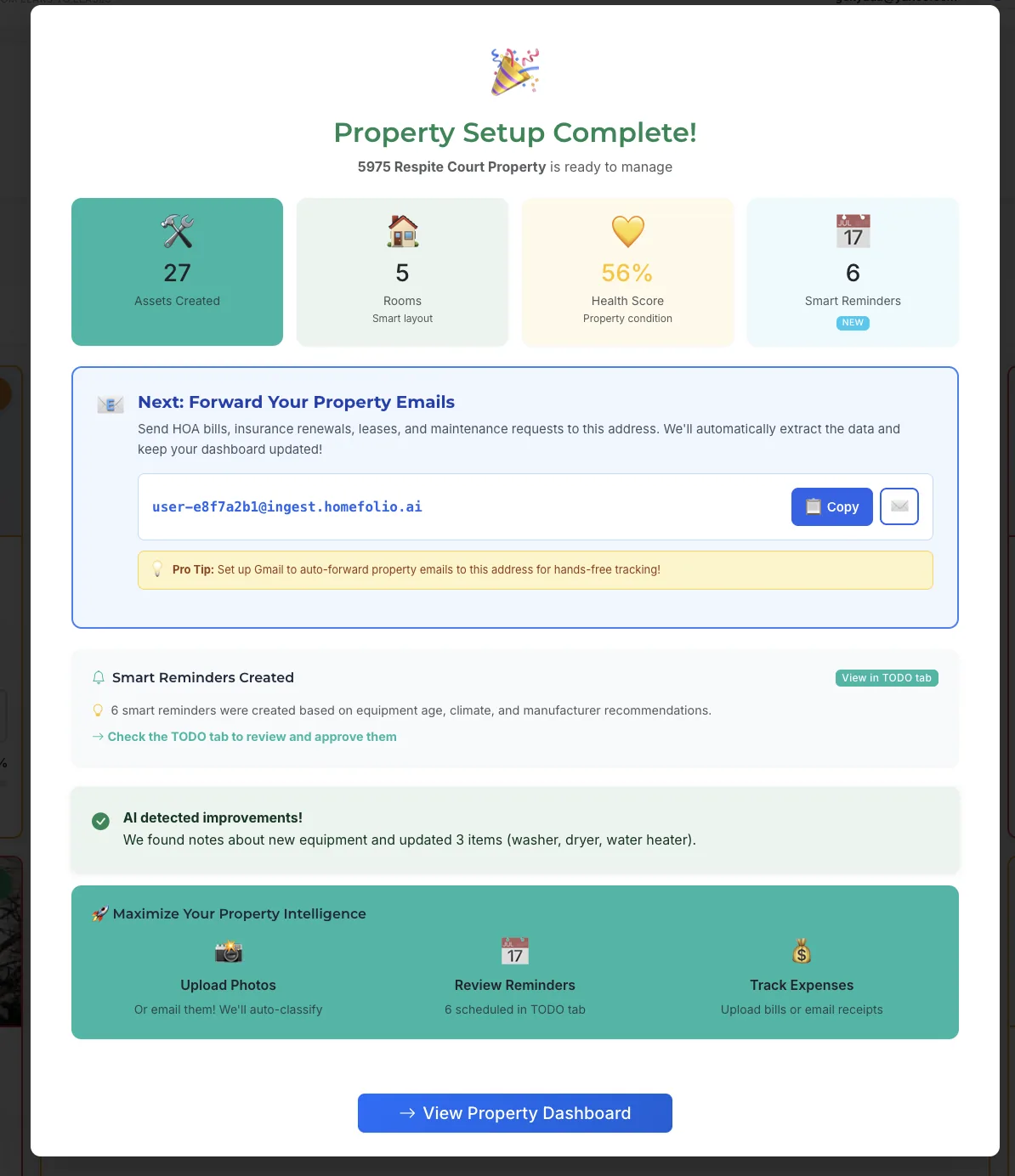
Fortunately, digital tools can simplify this process. Homefolio AI, for example, ensures all your home's documents are already there and connected to the right property, making tax documentation effortless. By having your home's information in one place, ready when you need it, you can avoid the annual paper chase. Learn more about Homefolio AI.
Consider scanning your important documents and storing them digitally. Not only does this save space, but it also provides easy access whenever you need to review or share them. Utilize apps and software designed for homeowners to keep everything organized and at your fingertips.
FAQs on Property Tax Assessments
What is a property tax assessment?
A property tax assessment is an evaluation conducted by your local government to determine the value of your property. This value is used to calculate your annual property tax bill. Assessments consider factors like property size, location, and improvements. Understanding this process helps you ensure you're paying a fair amount in taxes.
How often are property assessments updated?
Property assessments are typically updated every one to five years, depending on your local jurisdiction. Some areas assess annually, while others may do so less frequently. It's essential to stay informed about your area's assessment schedule so you can anticipate changes in your property taxes and budget accordingly.
Can I appeal my property tax assessment?
Yes, you can appeal your property tax assessment if you believe it is inaccurate. The process involves gathering evidence that supports your claim of an over-assessment. Make sure to check your local government's procedure for appeals, as the rules and deadlines can vary significantly by region.
What factors can increase my property tax?
Several factors can lead to an increase in your property tax, including home improvements, rising market values, and changes in local tax rates. Even if you haven't made changes to your property, your taxes can increase if the overall value of properties in your area rises. Keeping informed can help you prepare for any changes.
How do I find out my property's assessed value?
You can usually find your property's assessed value on your most recent property tax bill or by visiting your local assessor's office. Many jurisdictions also offer online access to assessment records. Reviewing your assessed value regularly can help ensure it reflects your property's actual worth.