Property Tips

Avoid Costly Mistakes: Key Documents to Retain After Home Purchase

Avoid Costly Mistakes: Key Documents to Retain After Home Purchase

The $8,000 Mistake: Cost of Missing Key Documents

Imagine this: The average American home brims with $14,000 in appliances, yet most homeowners can't locate a single warranty document. This oversight isn't just frustrating—it can be financially devastating. According to home insurance data, failing to retain critical documents can lead to out-of-pocket expenses averaging $8,000 per incident, whether it's due to unclaimed warranties or disputed insurance claims.

Take the case of a couple who lost their home improvement records during a move. A few years later, they were hit with a $10,000 repair bill that could have been avoided if they had proof of a previous contractor's work. Another homeowner faced a similar fate when they couldn't provide documentation for a faulty roof repair, costing them an additional $6,000.

These are not rare occurrences. Studies suggest that over 30% of homeowners have misplaced critical documents at some point, resulting in financial setbacks. The lesson is clear: Proper document retention isn't just about saving a few bucks—it's about safeguarding your biggest asset.

Essential Documents Every Homeowner Should Retain

Once the ink on your mortgage papers has dried, the real work begins. The deed and title documents are proof of your ownership and are crucial if you ever decide to sell—think of them as the birth certificate for your home. Keep these documents in a safe place, perhaps even a fireproof safe, because replacing them can be a costly hassle.

Mortgage and loan agreements are your roadmap to financial freedom. They outline your payment responsibilities and any penalties you might face for late payments. Losing these can lead to misunderstandings with your lender and potential financial penalties. A well-organized filing system, whether digital or physical, can save you from headaches down the road.

If you're feeling overwhelmed, start with a simple action step: scan these documents and save them in a secure cloud storage. Many homeowners find this digital backup invaluable, especially in emergencies. Remember, these documents aren't just paper—they're your safety net.

Why Keeping Home Improvement Records is Crucial

Every dollar you invest in home improvements should be carefully documented. Industry data shows that well-documented improvements can boost your home's value by up to 20%. Whether you're upgrading your kitchen or adding a new deck, these records can make a significant difference when it's time to sell.

Home improvement records are also essential for tax purposes. They can help you claim deductions and reduce capital gains tax when you sell your home. Without these documents, you're essentially leaving money on the table. Keeping detailed records of every renovation, including receipts and permits, is a small effort that can lead to substantial savings.

To keep things straightforward, maintain a dedicated folder—physical or digital—for all home improvement records. Include invoices, contracts, and any relevant correspondence. This simple organizational step can offer peace of mind and financial benefits when tax season rolls around.

The Role of Home Maintenance Records in Homeownership

Regular home maintenance is like brushing your teeth—it prevents bigger problems down the line. But how do you prove you've been diligent? Maintenance records are key. They show potential buyers that you've taken good care of the property, which can increase its resale value. In fact, studies suggest that homes with comprehensive maintenance records sell 10% faster.

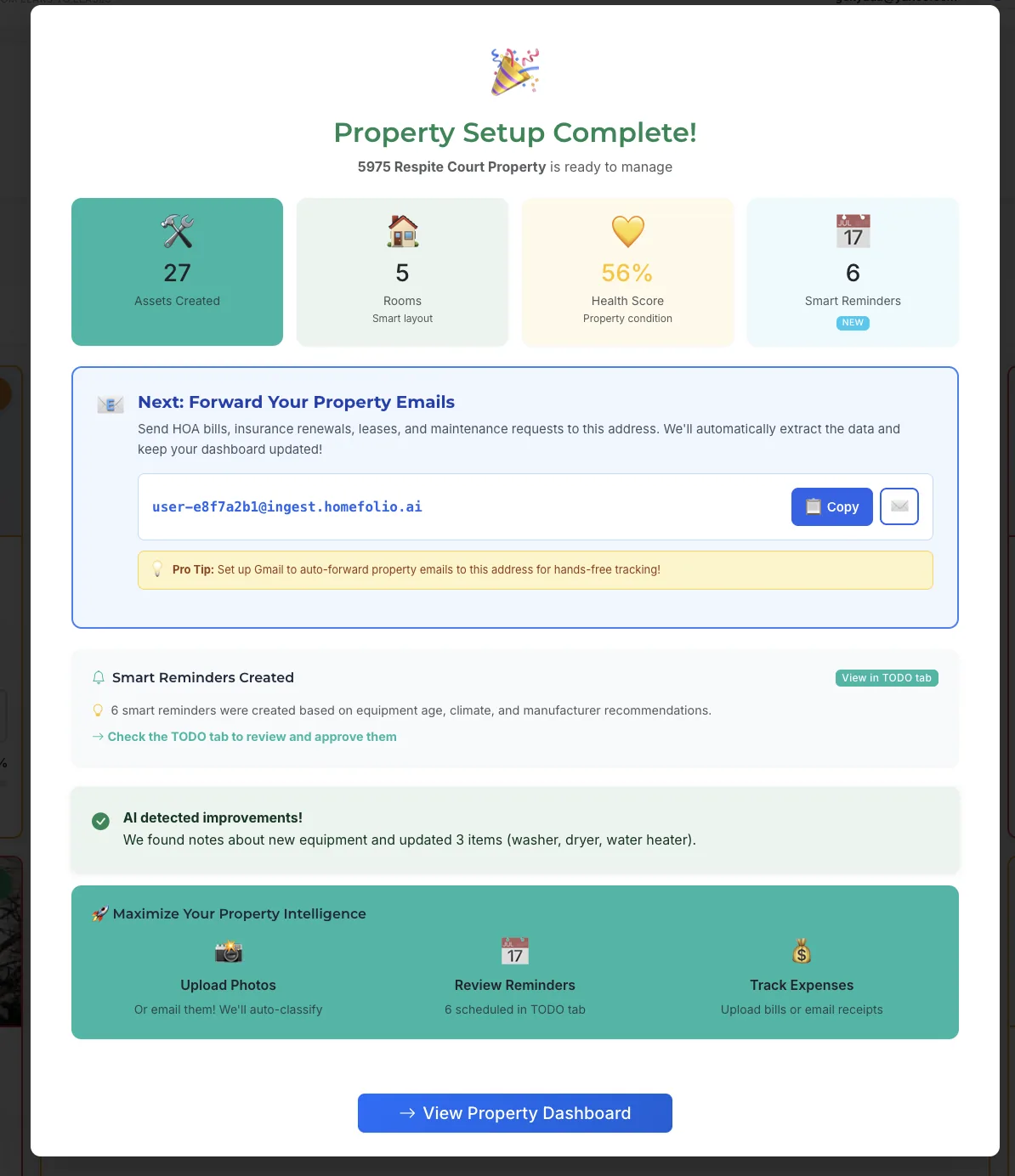
These records are also essential when filing insurance claims. Homeowners often struggle with proving regular maintenance to potential buyers, but with Homefolio AI, your maintenance records are already there when you need it, connected to the right property, easing the process of insurance claims. Imagine having all your home's information in one place, ready for whatever comes your way.

Start by creating a calendar reminder for regular maintenance tasks. Document each service with a date, description, and photos if possible. This simple habit can save you from future headaches and costly repairs.

How Long Should Homeowners Keep These Documents?

Document retention isn't one-size-fits-all. Understanding the retention periods for different documents is crucial. For instance, keep your deed and title documents for as long as you own the property. Mortgage documents should be retained until the loan is fully paid off and then for a few years afterward, just in case.

Home improvement records should be kept for at least seven years after you sell the house. This period covers most tax implications and provides a safety net in case of disputes. Maintenance records, on the other hand, should be kept for the life of the appliance or system they document.

For a streamlined approach, categorize your documents by retention period and create a system for regular reviews. This habit not only keeps you organized but also ensures that you're prepared for any financial or legal need that arises.

FAQs About Document Retention for Homeowners

What documents should new homeowners keep?

New homeowners should keep the deed, title documents, mortgage agreements, and insurance policies. Don’t forget to retain inspection reports and any warranties for appliances or systems in the house. These documents are your first line of defense against disputes and financial pitfalls.

How long should I keep home purchase documents?

Keep home purchase documents for as long as you own the property and for at least three years after selling it. This timeline covers potential tax audits and legal issues. Use a secure filing system or digital storage to ensure these documents are accessible when needed.

Are electronic copies of home documents acceptable?

Yes, electronic copies are generally acceptable and can be more convenient. Just ensure they are backed up in multiple secure locations. Many homeowners use cloud storage for easy access and protection against physical damage or loss.

What should I do if I lose important home documents?

If you lose important documents, contact the issuing authority immediately. For deeds, contact your county’s recorder office. For insurance papers, reach out to your agent. Many documents can be reissued, but it's a process that underscores the importance of keeping backups.

How can digital tools help manage home records?

Digital tools can make managing home records painless. Use a service like Homefolio AI to ensure your home's information is in one place, ready for whenever you need it. These tools automate data management, reducing the risk of loss and making it easy to access records anytime.

Your Home's Records — Already There When You Need Them.

Warranties, receipts, maintenance history, and appliance details — connected to your property automatically.

Get Started Free →