Property Tips

Avoid Costly Gaps: Master Homeowners Insurance Policies

Avoid Costly Gaps: Master Homeowners Insurance Policies

The average American home boasts about $14,000 in appliances, yet a shocking number of homeowners can't produce a single warranty document when needed. This oversight isn't just about warranties; it extends to understanding homeowners insurance policies. A policy misstep can cost you thousands. Let's make sure you're not one of those homeowners.

The $10,000 Oversight: Common Coverage Gaps

Homeowners often find themselves underinsured, with glaring gaps that they only discover during a crisis. Commonly, people overlook flood insurance, assuming their standard policy covers it—only to face a $10,000 bill when Mother Nature decides to reroute her plans. Industry data shows that nearly 60% of homeowners lack flood coverage, potentially risking financial ruin.

Consider the case of the Smith family, who learned this lesson the hard way. After a severe storm, they faced $15,000 in basement repairs, which their basic policy didn’t cover. Such scenarios aren’t rare. In fact, studies suggest that two-thirds of American homeowners are underinsured by at least 20% of their home’s value, often due to misunderstood policy terms.

To avoid becoming another statistic, review your policy with a fine-toothed comb. Specifically, check for coverage on natural disasters pertinent to your area. If you're unsure, consult with your insurer or a trusted advisor to ensure no stone—or policy term—is left unturned.

Decoding Policy Jargon: What You Need to Know

Insurance policies are notorious for their complex jargon, leaving many homeowners scratching their heads. Let’s demystify a few essential terms. A deductible is the amount you pay out-of-pocket before your insurance kicks in. A higher deductible usually means a lower premium, which is the amount you pay for the policy itself.

Another critical distinction is between actual cash value (ACV) and replacement cost. ACV considers depreciation, meaning your payout might not cover the cost of new items. Replacement cost, however, reimburses you for the actual cost of replacing damaged items. Industry data shows that opting for replacement cost coverage increases premiums by about 10%, but it's often worth the peace of mind.

When reviewing your policy, prioritize understanding these terms. Adjusting your deductible or choosing between ACV and replacement cost can significantly impact your financial preparedness. Always weigh the benefits against potential costs—an informed choice today can save a hefty expense tomorrow.

Tailoring Your Policy: Factors Affecting Your Coverage Needs

Your home isn’t just a building; it’s a unique entity with specific insurance needs. Factors such as location, age, and amenities can dramatically affect your coverage requirements. For instance, homes in hurricane-prone areas may require additional windstorm coverage, while older homes might need policies that cover outdated wiring or plumbing.

According to a recent survey, 70% of homeowners didn’t adjust their policy limits after significant home improvements. Whether it's a new kitchen or an added room, any change can alter your insurance needs. It's crucial to reassess your policy limits regularly and ensure they reflect your home's current state.

Start by listing all recent home updates and evaluate how they affect your insurance. Consult your insurer to adjust the coverage accordingly. A simple call can mean the difference between adequate protection and a financial setback when disaster strikes.

Claims Made Easy: Navigating the Process

Filing an insurance claim can feel like navigating a labyrinth, but it doesn’t have to be a nightmare. First, document everything. Take photos and videos of the damage immediately. This creates a visual record that’s invaluable when filing a claim.

Next, contact your insurer as soon as possible. Provide detailed information about the damage, complete with visuals. Remember, specificity is your friend. The more precise your claim, the smoother the process. Industry data indicates that well-documented claims are processed 30% faster than those that aren’t.

Finally, follow up diligently. Keep records of all communications with your insurer. If the process stalls, a polite but firm nudge can expedite things. Knowing how to navigate a claim efficiently could save you time, money, and plenty of stress.

Leverage Technology: Simplify Insurance Documentation

Gone are the days of rummaging through drawers for lost documents. Embrace technology to keep your insurance documentation accessible and secure. Digital tools can simplify this process, ensuring your information is always at your fingertips.

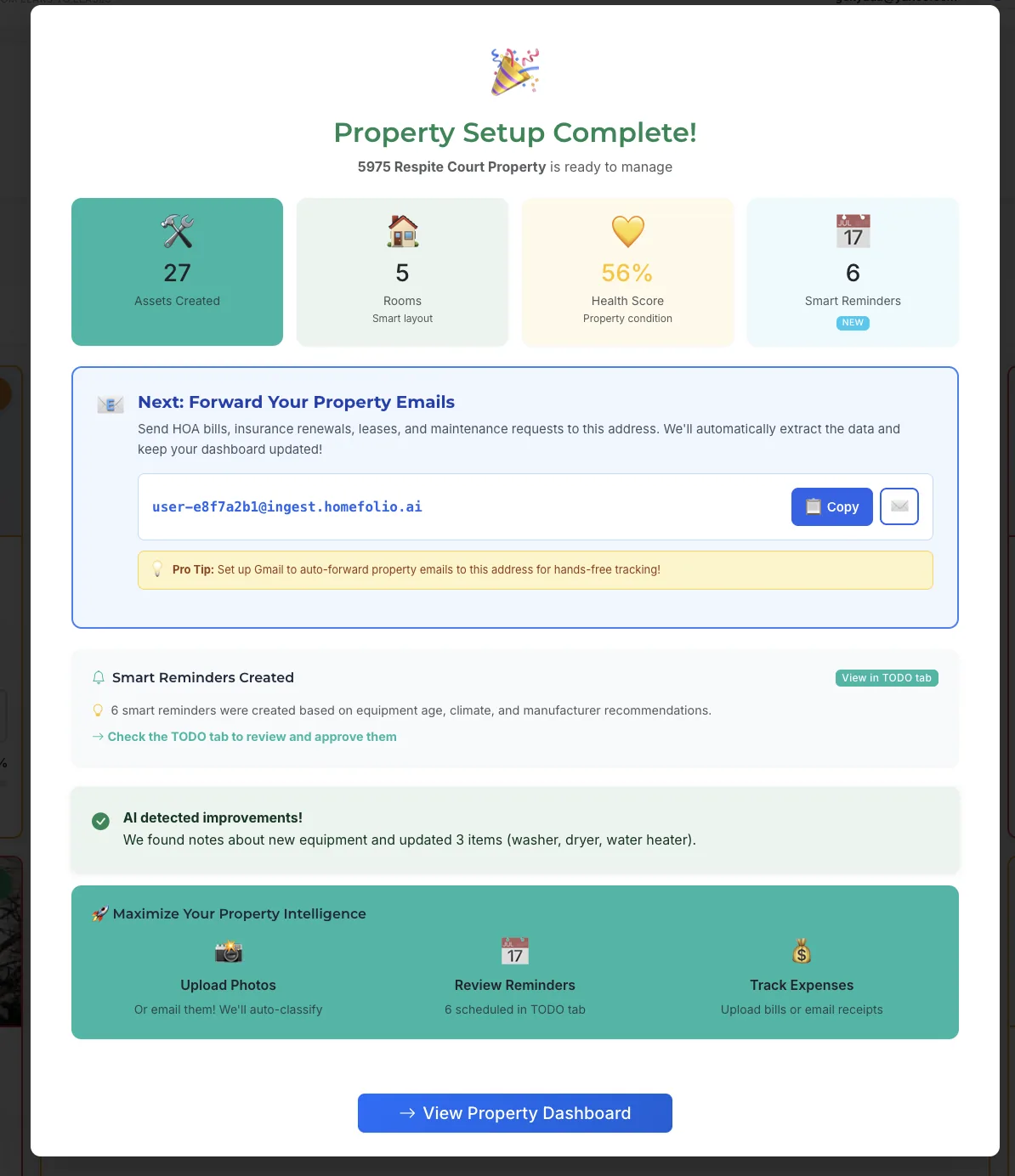
One such tool is Homefolio AI. With Homefolio AI, your insurance documentation is already there when you need it, connected to the right property. This ensures that when the unexpected happens, everything you need is ready—making the claims process less daunting.

Digital records come with their perks. They’re easy to update, share, and access from anywhere. So, switch to a digital documentation system today—because nobody enjoys a paper chase during a crisis.

FAQs: Answers to Top Homeowners Insurance Questions

What is excluded from a standard homeowners insurance policy?

Standard policies often exclude natural disasters like floods and earthquakes. Personal belongings over a certain value, such as jewelry or art, may not be fully covered without additional riders. Always read your policy details to understand what's included and consider supplemental coverage if needed.

How often should I review my insurance policy?

Review your policy annually or after any major home renovation. Changes in the home or market value can affect your insurance needs. Regular reviews ensure that your coverage remains adequate and that you’re not paying for unnecessary extras.

What should I do if my claim is denied?

If your claim is denied, request a written explanation from your insurer. Review the denial against your policy terms. You can appeal the decision, providing additional evidence to support your claim. If necessary, seek assistance from a public adjuster or legal advisor.

Will my insurance cover home improvements?

Home improvements can affect your coverage needs but are not automatically insured. Inform your insurer of any significant changes to ensure your policy is adjusted accordingly. This ensures that new additions are covered in the event of damage.

How can I reduce my homeowners insurance premium?

To lower your premium, consider raising your deductible or installing home security systems. Bundling insurance products, such as combining home and auto insurance, often results in discounts. Regularly reviewing and updating your policy can also help eliminate unnecessary coverage.

Your Home's Records — Already There When You Need Them.

Warranties, receipts, maintenance history, and appliance details — connected to your property automatically.

Get Started Free →